
On the occasion of World Environment Day, Jan Swasthya Abhiyan India (JSAI) organized a national conference on occupational and environmental health on June 5 at Gandhi Bhavan, Bhopal. Representatives of labor organizations, public health experts, community members, and environmental activists from Uttar Pradesh, Madhya Pradesh, Jammu and Kashmir, Delhi, Bihar, Chhattisgarh, Manipur, Assam, Odisha, Gujarat, Maharashtra, and Rajasthan participated in the conference and discussed challenges related to occupational health, environmental damage, and workers’ rights. The discussions were organized into four sessions covering occupational health, environmental health, climate change, and water and global warming.
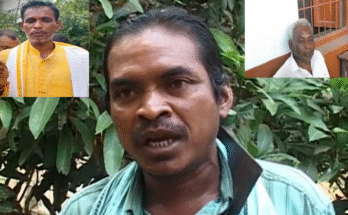
The conference emphasized that work-related health and safety remain a major public health concern in India, with millions of workers facing hazardous conditions in industries, mining, construction, domestic work, and other informal sectors. Participants discussed the need for better implementation of labour laws, workplace safety standards, and coordinated efforts to protect workers’ health. Some workers affected by silicosis shared their experiences and the challenges they face in obtaining assistance. Highlighting the importance of such conferences, Amulya Nidhi said that awareness must be increased and collective efforts made to protect the environment and prevent work-related health hazards.
Occupational health expert Jagdish Patel stated that risks related to occupational health hazards exist everywhere and must be identified. More than 90 types of work can cause silicosis. Over 70 countries have banned asbestos; India has only banned asbestos mining but still allows its import. Speaking about workplace hazards, Ms. Chunni said that workers face many kinds of dangers while working. They lose limbs, and in some accidents, even their lives. Her organization helps them obtain compensation and other forms of support.
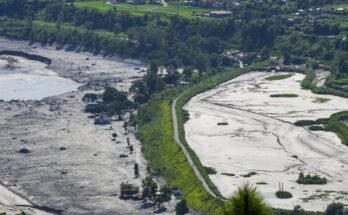
The second major session focused on “Environment, Climate and Health,” covering occupational hazards in mining and related industries, environmental degradation, challenges of safe drinking water, and the impact of climate change on public health. Kailash Meena, involved in the struggle to protect the Aravali range, said that resources should be used responsibly while also being conserved. The extensive cutting of the Aravalli hills is creating a serious crisis. Rajkumar stated that natural resources are being lost rapidly. Fifty years ago, India had 15,000 rivers, of which 4,500 have disappeared. Approximately, two million deaths occur every year in India due to air pollution. Air, water, and soil have been made toxic, directly affecting public health. Rakesh Diwan said that society is becoming self-destructive, and there is much to learn from communities that have preserved forests to this day. Traditional knowledge that has protected the environment should be respected.
The final session focused on future occupational health strategies, particularly strengthening work at the state level. Jan Swasthya Abhiyan India decided to organise a National Conference on International Human Rights Day, 10 December 2026. While releasing a declaration, the program also outlined an upcoming action plan, which includes presenting a report assessing occupational health conditions and preparing an assessment report on laws, policies, and safety-related impacts affecting workers employed in hazardous industries. Health surveys of families affected by development projects will be conducted in five states, and status reports will be released. Surveys of healthcare services and the condition of the Employees’ State Insurance (ESI) system will also be carried out.
This year, JSA India conducted a Health Day campaign across all states and union territories of the country, which will be further strengthened. The conference also decided to launch a National Health Rights Course, with the first program scheduled to be held in Srinagar from 1–7 September 2026.
The success of the program was made possible by the significant contributions of Sanjeev Sinha (Uttar Pradesh), Goranga Mahapatra (Odisha), Chandrakant Yadav, Punita Kumar, Prakash Gardia (Chhattisgarh), Iffat Raag (Delhi), Rahi Riyaz (Jammu and Kashmir), Hemlata Kansotiya (Rajasthan), Mukut Lochan (Assam), Rishikant (Manipur), and others.
Issued by- JSA-INDIA Secretariat Contacts: Amulya Nidhi (9425311547 / 9821253773), Goranga Mohapatra (9437036305), Chandrakant Yadav (9179364847), Sanjeev Sinha (9140654917), Rahi Riyaz (7006578737)
Mitra Ranjan (9717965840)
Email: jsaindiasect@gmail.com