
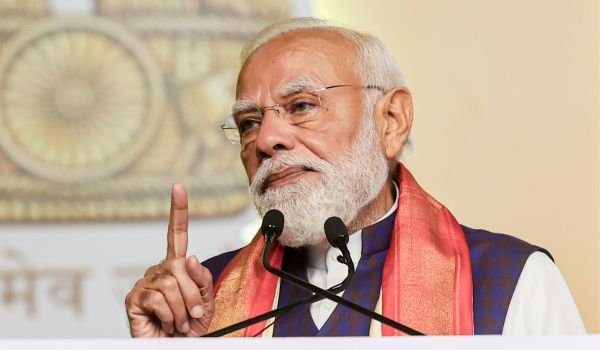
Prime Minister Narendra Modi’s recent appeal urging citizens to reduce petrol consumption, avoid unnecessary gold purchases, postpone foreign travel, and increasingly rely on public transport has triggered intense public debate across India. Supporters interpreted the remarks as a responsible call for collective discipline during a period of global uncertainty, geopolitical instability, and rising energy insecurity linked to tensions in West Asia. Critics, however, viewed the speech differently not as strategic economic leadership, but as an attempt to transfer the burden of structural economic weakness onto ordinary citizens. The controversy surrounding the speech is, therefore, not merely political. It raises a deeper philosophical and economic question as to when a state begins asking citizens to consume less in order to preserve national stability, does it reflect prudent leadership or evidence of institutional fragility?
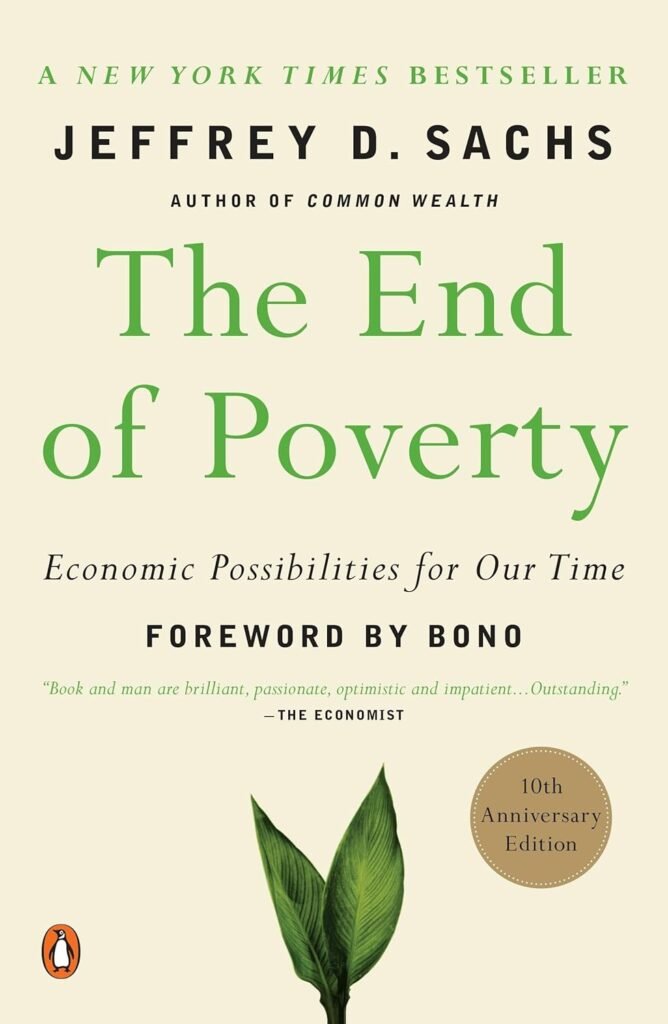
This question becomes particularly significant when examined through the intellectual framework of economist Jeffrey Sachs and his influential work The End of Poverty (The End of Poverty: Economic Possibilities for Our Time, Penguin Books, 2005), where Sachs argued that sustainable development depends not upon permanent public sacrifice, but upon the creation of resilient institutions capable of protecting citizens from structural economic vulnerability. So far as the state’s responsibility in development is concerned, Jeffrey Sachs consistently argued that poverty and economic insecurity are rarely the result of individual moral failure. Instead, they emerge from weak institutions, policy failures, inadequate infrastructure, low productivity, governance inefficiencies, structural inequality, and insufficient state capacity. In Sachs’ framework, development is fundamentally the responsibility of institutions. The central thesis of The End of Poverty was never that citizens must continuously reduce aspirations or consumption to stabilize the economy. Rather, the responsibility of governance is to create systems strong enough to absorb external shocks without repeatedly transferring disproportionate pain onto households.
Viewed through this lens, the unease generated by Modi’s remarks becomes understandable. When citizens are repeatedly asked to, use less fuel, avoid buying gold, postpone foreign travel, reduce discretionary spending, shift toward work-from-home arrangements, limit consumption in the name of national stability, many naturally begin asking a difficult question if after years of claims regarding economic strength, digital transformation, rising GDP, and aspirations of becoming a global superpower, the economy still remains highly vulnerable to oil prices and external disruptions, then where exactly does the structural resilience lie?
Nationalism and economic anxiety has a deep route. Historically, governments under economic pressure have often invoked patriotic restraint. During wars, sanctions, inflationary crises, foreign exchange pressures, or energy shocks, states frequently encourage citizens to reduce consumption in the name of national duty. However, there exists a fine line between economic prudence and psychological austerity. Jeffrey Sachs repeatedly warned against confusing symbolic nationalism with genuine economic resilience. An economy does not become structurally strong merely because citizens are emotionally persuaded to consume less. Long-term resilience emerges from productivity growth, energy independence, technological innovation, manufacturing competitiveness, institutional trust, and strategic policy planning.
The concern among critics is, therefore, not about public transport itself. Public transport is economically rational, environmentally beneficial, and socially efficient. The concern lies in the narrative architecture surrounding the appeal. When governments celebrate economic success during favorable periods but invoke collective sacrifice during moments of stress, public trust gradually weakens. Citizens begin feeling that success is privatized while sacrifice becomes socialized. This creates a dangerous psychological imbalance between state rhetoric and lived economic reality.
Going with the gold purchase, among all aspects of the speech, the appeal discouraging gold purchases perhaps generated the strongest emotional reaction. In India, gold is not merely a luxury commodity. It functions simultaneously as cultural capital, intergenerational security, inflation protection, and a psychological hedge against uncertainty. For millions of lower and middle-income households, gold remains a parallel savings mechanism outside fragile financial systems. Jeffrey Sachs repeatedly emphasized that sustainable economic systems ultimately depend upon institutional confidence. When citizens prefer physical assets such as gold over financial instruments, it often reflects deeper anxieties surrounding inflation, purchasing power, currency stability, or distrust in formal systems. Discouraging gold purchases without simultaneously strengthening financial confidence therefore risks appearing less like reform and more like symptom management.
Another reason the speech generated discomfort is because the Indian middle class already experiences multiple layers of invisible economic pressure viz. rising living costs, stagnant wage growth relative to inflation, employment insecurity, expensive urban housing, healthcare vulnerability, educational inflation, high indirect taxation, fuel-linked inflation. In such an environment, appeals for additional sacrifice are often interpreted not as patriotism, but as evidence that the state itself possesses limited economic room for maneuver. Jeffrey Sachs argued that successful nations do not merely demand resilience from citizens. They create systems that reduce the need for continuous sacrifice.
The discomfort surrounding such appeals cannot be understood purely through economics. It is equally a question of institutional psychology and social trust. Recent inequality research associated with the Challenging Inequalities (Challenging Inequalities — Institute for Fiscal Studies Deaton Review on Inequalities, Princeton University Press, 2025) argues that prolonged economic stagnation combined with visible concentrations of wealth gradually weakens institutional trust and intensifies political alienation. The study highlights how societies experiencing stagnant incomes, rising living costs, constrained social mobility, and widening wealth concentration often develop growing skepticism toward political and economic institutions.
This contradiction becomes particularly dangerous in aspirational economies. Citizens are generally willing to tolerate inequality when they believe opportunities remain accessible and their own future trajectory is improving. However, when economic progress appears uneven, the language of sacrifice starts generating frustration rather than solidarity. In such environments, even reasonable calls for conservation begin acquiring a different political meaning. Citizens increasingly interpret restraint not as temporary national discipline, but as evidence that structural vulnerabilities remain deeper than official narratives acknowledge. The study further emphasizes that modern inequality is no longer merely about income disparities. It is increasingly about insecurity, declining confidence in institutions, unequal access to opportunity, rising concentrations of wealth, and the perception that economic risks are disproportionately transferred onto ordinary households while systemic advantages remain concentrated at the top.
This is perhaps the deeper anxiety underlying the reaction to Modi’s remarks. The concern is not public transport itself. The concern is whether repeated appeals for behavioral restraint indicate that structural resilience remains weaker than the rhetoric of economic nationalism suggests. There is also a deeper developmental paradox embedded within such public messaging. Historically, developing economies encouraged aspiration, mobility, consumption, and wealth creation because rising consumption itself symbolized expanding confidence and upward mobility. Citizens buying homes, vehicles, gold, education, or international experiences were viewed as indicators of a confident and expanding middle class.
But when ordinary consumption begins getting framed as a potential national burden, the psychological relationship between the state and citizens subtly changes. Economic participation starts appearing less like prosperity and more like risk management. This is where the intellectual frameworks of economists intersect powerfully. Both, in different ways, emphasized that durable development ultimately depends upon institutional systems strong enough to absorb crises without repeatedly transferring insecurity to ordinary citizens. A confident economy expands citizen freedom during periods of uncertainty. A fragile economy repeatedly asks citizens to contract aspirations.
Critics have also argued that the speech attempted to transform structural economic vulnerabilities into questions of individual moral responsibility. Why does energy dependence remain so high? Why does domestic productivity remain insufficient? Why are external shocks transmitted so rapidly into household anxiety? Why does inflation continue disproportionately affecting the middle class? The public discourse risks shifting toward whether citizens themselves are consuming excessively. This transformation of structural economic questions into behavioral morality may be politically effective, but it remains economically incomplete. A strong nation is not one where citizens are repeatedly asked to lower aspirations.
A strong nation is one where institutions become powerful enough that ordinary citizens can pursue prosperity without fearing that every geopolitical disruption will require lifestyle sacrifice. Perhaps the most important lesson from Jeffrey Sachs is that development is not measured merely through headline GDP growth, political branding, or symbolic nationalism. It is measured through institutional resilience. A genuinely resilient economy should not become psychologically fragile every time oil prices rise or global trade routes face disruption. Citizens can certainly contribute to national stability. Conservation, efficiency, and responsible consumption are valuable civic virtues. But civic virtue cannot permanently substitute structural economic reform. The deeper question raised by Modi’s remarks is therefore not whether citizens should conserve fuel.
The deeper question is whether a nation aspiring toward global leadership can continue depending upon periodic public sacrifice as a substitute for long-term economic insulation. That is where Jeffrey Sachs’ critique of development becomes profoundly relevant. Because ultimately, sustainable national strength is not built by asking citizens to consume less. It is built by creating institutions strong enough that citizens no longer fear the future every time the world enters crisis.
The Prime Minister’s remarks were linked to concerns surrounding rising global energy prices and foreign exchange pressures amid escalating tensions in West Asia. While such concerns may indeed justify caution, they also reveal an important truth that economic resilience is tested not during periods of prosperity, but during moments of stress and the true measure of national strength lies not in how effectively citizens can be persuaded to sacrifice, but in how effectively institutions can protect citizens from the need for constant sacrifice in the first place.
The Writer is an Investment Banker based in Kolkata/Mumbai. Views expressed in this article are personal.