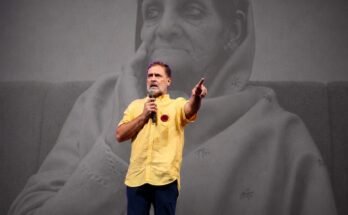
Why Rahul Gandhi’s rhetoric appears reactive, not visionary?
Why Rahul Gandhi May Need to Move Beyond Social Justice, Caste and Crony Capitalism as Standalone Themes to Expand His Political and Media Reach
Read More
Junputh
Why Rahul Gandhi May Need to Move Beyond Social Justice, Caste and Crony Capitalism as Standalone Themes to Expand His Political and Media Reach
Read More
In incidents like that of Baruipur, crimes committed by members of minority communities against members of the majority are framed not as isolated criminal acts, but as collective civilizational assaults. The rhetoric rapidly transcends individual culpability and enters the realm of demographic anxiety, historical grievance, and cultural nationalism.
Read More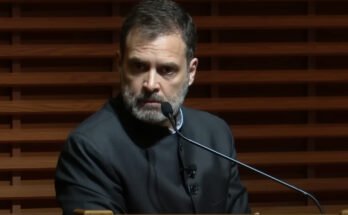
The larger question is not whether Rahul Gandhi deserves criticism. Every political leader does. The question is whether the condition of India’s opposition can be adequately explained by focusing primarily on one individual. It cannot.
Read More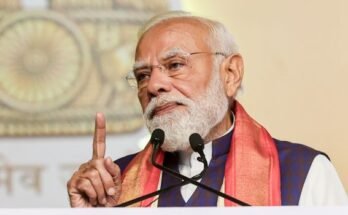
Prime Minister Narendra Modi’s recent appeal urging citizens to reduce petrol consumption, avoid unnecessary gold purchases, postpone foreign travel, and increasingly rely on public transport has triggered intense public debate across India.
Read More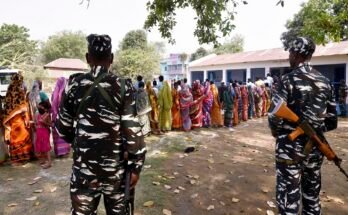
When concentrated capital acquires emotional legitimacy as the symbol of national rise, democratic questioning becomes harder. Citizens begin to celebrate the image of prosperity even when they remain uncertain participants in that prosperity. This is how crony capitalism enters the public imagination, not only through influence, but through narrative normalization.
Read More
Neo-classicists rightly argue that nobody has absolute free will and determinism. They appoint judges who are law experts to review the mitigating factors. Here comes the editing point. NV Ramana could have deliberated on the roles and responsibilities of the judiciary in applying the law on the fast track.
Read More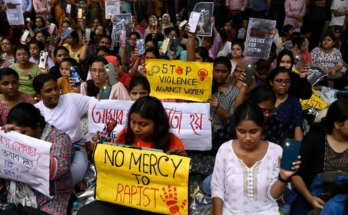
The Indian judiciary must bring justice speedily, more particularly where crime involves a woman and that justice must not be retributive or reformative rather it should be deterrent.
Read More
He was born in a Bengali Brahman family on 22nd Day of May 1772; educated in Persian, Arabic, and Sanskrit; and self-educated in English through business connections to British civil servants and employment in the East India Company besides dozens of other languages like French, Latin, Greek and Hebrew
Read More
Hindus already had an aversion to anything foreign. This “otherness” was ancient. The extent of ‘’otherness’’ described by him is as follows: “in all manners and usages, they differ from us to such a degree as to frighten their children with us, with our dress, and our ways and customs, and as to declare us to be devil’s breed, and our doings as the very opposite of all that is good and proper”.
Read More
When one visits any part of Bengal, one will hear that ‘the ideal of stability (moral rhythm, balance of power, harmony of structure with its foundation) is deeply cherished in women’s nature.’ This sense was germinated by Gurudev. In 1923 he started Basanta Utsav in Bengal just to bring equity.
Read More