
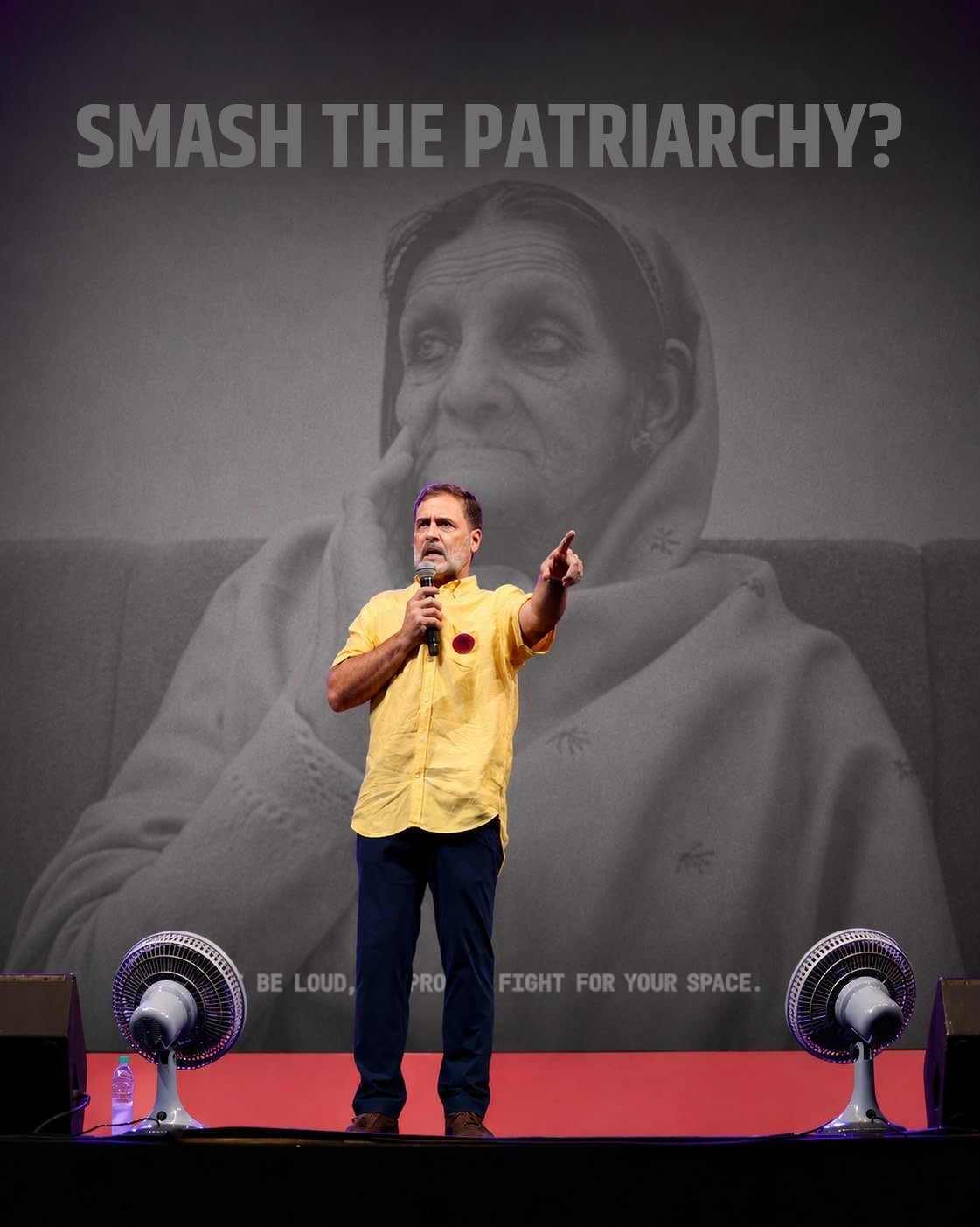
In contemporary politics, media attention is not merely a function of the importance of an issue. It is often a function of novelty, emotional resonance, electoral relevance, and the ability of a leader to shape a broader national narrative. This reality presents an interesting strategic challenge for Rahul Gandhi. Over the last several years, his political messaging has increasingly centered around three themes viz. social justice, caste inequality, and crony capitalism. While these are undeniably significant issues in a democratic society, a question arises as to can a political leader build a sustainable national narrative by relying predominantly on these themes? Or does political expansion require a broader and more diversified agenda?
The world is entering an era where Artificial Intelligence, automation, robotics, quantum computing, biotechnology, and advanced manufacturing will reshape economies more profoundly than globalization did over the last three decades. In this environment, political narratives built primarily around historical grievances may struggle to capture the imagination of younger generations. The central questions of the AI era are rapidly becoming as to who will own the algorithms? Who will control data? Which countries will lead AI innovation? How will workers be reskilled? How will productivity gains be distributed? What happens to jobs displaced by automation? How can technology reduce inequality rather than deepen it? These questions cut across caste, religion, region, and class. A software engineer in Bengaluru, a factory worker in Pune, a farmer using AI-driven crop analytics in Bihar, and a startup founder in Hyderabad will all be affected by the AI revolution. The challenge for political leaders is therefore shifting from merely discussing redistribution of opportunities to creating opportunities in entirely new sectors.
This is not the fact that Rahul Gandhi is not agitating this question but his continuity is disrupted. Before the Iran war and even Operation Sindoor, he said that the future war will be dependent upon drones and AI on which he even has made a video. The speed with which his foresight is coming true has surprised many, especially considering that he was often ridiculed for almost every unconventional idea he championed, including this one.
The debate of the 20th century was largely about representation. The debate of the 21st century will increasingly be about capability. In an AI-driven economy, nations will compete not on the basis of population alone but on the quality of their human capital. A future oriented political narrative could therefore ask as to how many AI engineers is India producing? How many semiconductor experts? How many robotics specialists? How many biotechnology researchers? How many deep tech entrepreneurs? These questions are likely to determine India’s global standing far more than traditional political divisions. Social justice remains important, but it can be reframed as ensuring that every community participates in the knowledge economy.
The argument is not that social justice, caste representation, or concerns about corporate influence are unimportant. Rather, the argument is that if these themes become the dominant and recurring framework through which every issue is interpreted, they may eventually limit a leader’s ability to attract wider media attention and broader electoral support.
Even the concept of crony capitalism is changing. In the industrial era, political debates focused on land, mines, licenses, and physical assets. In the AI era, power increasingly comes from data, algorithms, cloud infrastructure, computing power, digital platforms. The next generation of political leaders will have to discuss not only corporate concentration but also technological concentration. The question will not simply be as to who owns the factories? It will increasingly become as to who owns the intelligence systems? This is a far more future-oriented discussion than traditional anti-corporate rhetoric. Because the first reason lies in understanding how modern media functions.
Media organizations are driven by audience attention. Whether it is television, digital platforms, newspapers, or social media, the competition for public attention is intense. Stories that are fresh, unexpected, or controversial tend to receive greater coverage. When a political leader repeatedly emphasizes the same themes, even important themes, the media eventually begins to view those statements as predictable e.g. if every major speech contains references to caste census, social justice, and alleged crony capitalism, journalists may stop treating such remarks as newsworthy because they have become part of an established political script. Narendra Modi is an exception to this.
One of the most famous observations attributed to media baron Rupert Murdoch is, “News is what somebody does not want printed; all else is advertising.” The quote is often used to explain how the media gravitates toward conflict, exposure, controversy, and power struggles. Whether one agrees with Murdoch or not, the observation highlights an important reality that the media rarely rewards predictability. A politician discussing the same themes repeatedly may be morally consistent but may not always remain media-relevant. Media houses often seek the next conflict, the next controversy, the next narrative shift. In other words attention is generated by movement, not repetition. This partly explains why leaders who frequently change thematic focus often dominate headlines.
Contrast this with leaders who frequently shift between multiple issues. One day they discuss economic reforms, another day technological innovation, another day foreign policy, and another day education. Such diversity generates multiple news cycles. The issue is therefore not whether Rahul Gandhi’s themes are important. The issue is whether a narrow thematic focus reduces media novelty. Political communication often follows a simple principle as to what is predictable becomes background noise. Media attention generally rewards surprise.
Political scientists often distinguish between issue ownership and issue dependence. Issue ownership occurs when voters associate a politician or party with a particular issue. Issue dependence occurs when a politician becomes overly reliant on a limited set of issues. A leader benefits from ownership but suffers from dependence. For instance, Narendra Modi is associated with development and nationalism, but his speeches also cover infrastructure, digital transformation, manufacturing, foreign policy, welfare programs, innovation, defense, and environmental initiatives. Similarly, Barack Obama was associated with healthcare reform and social inclusion, yet he regularly discussed economic growth, foreign affairs, entrepreneurship, technology, and education. Nelson Mandela combined justice with reconciliation.
Successful national leaders generally possess a signature issue, but they do not become prisoners of that issue. The challenge for Rahul Gandhi is that many voters increasingly perceive social justice, caste census, and anti-crony-capitalism narratives as his primary themes rather than as components of a broader vision. Rahul Gandhi has successfully established ownership over these issues. From a branding perspective, this has advantages. People know what he stands for. But yield is very low.
India is, however, one of the youngest countries in the world. Millions of young Indians enter the labor force every year. For many of them, immediate concerns include employment opportunities, income growth, skill development, housing affordability, start-up opportunities, professional mobility and digital infrastructure etc. While social justice remains relevant, many young voters evaluate politics through the lens of economic aspirations.
For the sake of argument let us consider two political messages (A) we need a caste census to ensure fair representation and (B) we will create ten million high-quality jobs through manufacturing expansion, logistics development, and technology investment. Both messages may be important. However, many voters may find the second message more directly connected to their personal economic future. This does not mean social justice should be abandoned. Rather, it suggests that social justice must be linked to economic opportunity. The political challenge is not simply to discuss inequality. The challenge is to explain how reducing inequality creates prosperity.
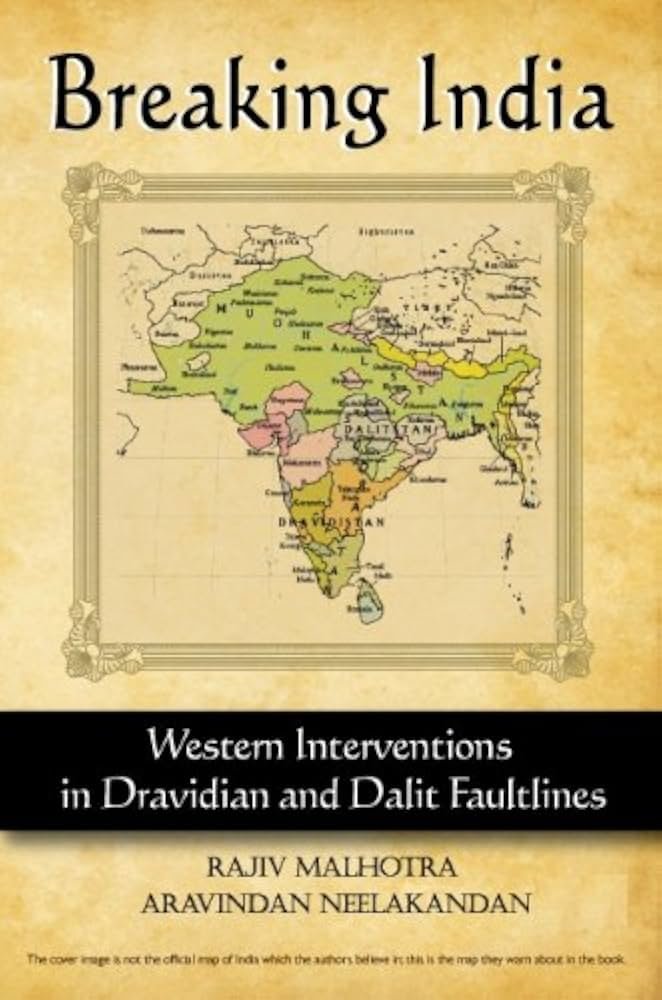
In Breaking India, Rajiv Malhotra argues that societies can become fragmented when identity-based fault lines dominate public discourse. Whether one agrees fully with his thesis or not, the AI age introduces a new dimension. While India debates caste, religion, and historical grievances, nations such as the United States and China are investing aggressively in AI, semiconductors, quantum technologies, and strategic industries. The risk is not merely social fragmentation. The risk is strategic distraction. History shows that civilizations decline not only because of external threats but also because they become consumed by internal conflicts while technological revolutions occur elsewhere.
Another strategic consideration involves the balance between criticism and vision. Again it is admitted that Rahul Gandhi excited the voters on these issues but not rampantly rather he focuses on his rhetoric.
The central thesis of the book argues that various external and internal ideological networks can exploit social fault lines such as caste, race, language, religion, and regional identity in ways that weaken national cohesion. Malhotra argues that narratives focused exclusively on identity-based grievances can sometimes be amplified through academic, media, activist, and institutional ecosystems, eventually creating deeper social fragmentation. One of the observations associated with the Breaking India thesis is that societies can become vulnerable when every issue is interpreted primarily through identity conflict rather than shared national purpose. Rahul Gandhi has to be cautious on that as there is whispering that The Narendra Modi-led government has increasingly polarized India along religious lines. If this trend is not checked, it risks creating deeper social fractures in the years ahead. Adityanath appears to have intensified this narrative, adding fuel to an already sensitive issue. These concerns are often discussed in whispers rather than openly, but whether they ultimately lead to a larger national division remains impossible to guarantee.
Political communication typically contains two elements, (A) a critique of existing problems and (B) a vision of future solutions. Over the years, Rahul Gandhi’s messaging on crony capitalism has largely focused on criticizing perceived concentration of economic power. Such criticism can be politically effective. Democracies require scrutiny of power. However, criticism alone rarely sustains public enthusiasm indefinitely. Voters eventually ask as to what is the alternative? What would be done differently? How would economic growth be generated? How would investment be attracted? How would jobs be created? Again history is kind to the fact that leaders who gain broader appeal when they combine critique with a compelling positive vision e.g. during the Great Depression, Franklin D. Roosevelt did not merely criticize economic conditions. He offered the New Deal. Similarly, leaders across the world generally succeed when they present a roadmap rather than only an indictment. A narrative centered primarily on crony capitalism risks being perceived as oppositional rather than transformational.
The political vocabulary of the future may include AI sovereignty, data ownership, digital rights, algorithmic accountability, human capital development, innovation ecosystems, technology governance and knowledge economy inclusion. A national leader who speaks only about historical injustice may appear reactive. A leader who connects social justice with AI readiness, technological capability, and future competitiveness may appear transformational. The most effective political message in the AI age may not be as to who got what in the past? but rather as to how do we ensure every Indian participates in the future? That narrative can still include social justice, caste equity, and concerns about concentrated economic power. However, they become components of a larger civilizational project of building an India that is not merely socially fair, but technologically advanced, economically competitive, and globally influential in the age of artificial intelligence. That is a conversation likely to attract not only media attention but also the aspirations of India’s next generation.
Media organizations often gravitate toward stories of progress and transformation. A speech about inequality may generate one news cycle. A speech outlining a revolutionary plan for artificial intelligence, green energy, manufacturing, or education may generate multiple news cycles because it creates a forward-looking narrative. People are naturally attracted to stories of possibility. Consider the excitement surrounding technology hubs, start-up ecosystems, space missions, infrastructure megaprojects and scientific breakthroughs. Since Rahul Gandhi has governments in states, he needs to prove his words through deeds.
Political leaders who connect themselves to such stories often receive broader media coverage because they become associated with national ambition. This is not because social justice is less important. It is because growth stories tend to generate wider emotional appeal. Globally, opposition leaders often face a similar dilemma. Take Bernie Sanders for example. He consistently focused on inequality and corporate power. While this gave him a strong ideological identity, critics argued that it limited his appeal among voters who prioritized other concerns. In contrast, leaders who successfully expanded beyond their core themes often built broader coalitions. Tony Blair is the best example. He combined social justice rhetoric with economic modernization.
Similarly, Bill Clinton connected social inclusion with economic opportunity. The lesson is not that inequality should be ignored. The lesson is that inequality becomes politically stronger when linked to growth, innovation, and opportunity. Another challenge arises when political messaging becomes associated with specific demographic groups. If social justice and caste discourse become perceived as benefiting only certain groups, other voters may feel excluded from the conversation.
A successful national leader must create a sense of shared national purpose. This requires narratives that transcend demographic categories. Themes such as economic mobility, quality education, healthcare access, entrepreneurship, infrastructure and national competitiveness have the advantage of appealing across social divisions. The most successful political narratives combine targeted justice with universal aspiration. Historically, elections are often shaped by perceptions of economic competence.
Voters may tolerate ideological differences if they believe a leader can improve their economic future. Therefore, a leader seeking broader media and electoral traction often needs clear positions on taxation,manufacturing, trade, investment, technology, innovation, infrastructure and energy security. A detailed economic framework can significantly expand political relevance. For Rahul Gandhi, discussions about inequality could potentially gain greater traction if accompanied by equally detailed proposals on wealth creation. Politics is not merely about distribution. It is also about production. Citizens want to know both how wealth will be shared and how wealth will be created.
Political communication is not only rational. It is emotional. Different themes generate different emotions. Social justice often generates concern, empathy, and moral urgency. Crony capitalism generates anger and skepticism. However, emotions such as hope, ambition, pride, and optimism can be equally powerful. Successful leaders generally balance grievance with aspiration. Too much emphasis on grievance risks creating political fatigue. People want acknowledgement of problems, but they also want confidence that solutions are achievable. This is why visionary projects often capture public imagination. They offer a sense of progress.
A national leader ultimately needs a narrative larger than any individual issue. Such a narrative might answer questions as to what should India look like in twenty years? What industries will drive growth? How can India become more competitive globally? How can technology improve governance? How can education transform productivity? How can social justice coexist with economic dynamism? These questions create opportunities for expansive political leadership. A narrative focused exclusively on caste or crony capitalism may struggle to answer all of them.
The most effective strategy may not be abandoning social justice. Rather, it may involve integrating social justice into a broader developmental framework. Instead of merely discussing representation, explain how inclusion increases productivity and innovation. Instead of focusing solely on identity, explain how better data leads to better governance. Instead of emphasizing corporate concentration alone, explain how fair competition benefits entrepreneurs and consumers. Connect discussions of inequality to education, skills, and employment.
This approach transforms social justice from a standalone political theme into part of a larger national development strategy. From a media perspective, diversification creates multiple opportunities for engagement. Imagine a leader discussing artificial intelligence one week. Manufacturing next week. Agricultural productivity after that. Educational reform the following week. Social justice as a continuing theme throughout. Such a leader appears multidimensional. Media outlets gain new angles. Different audiences become engaged. The political brand becomes broader.
The argument around the corner that Rahul Gandhi should stop talking about social justice, caste, and crony capitalism is ultimately too simplistic. These issues remain important and continue to influence millions of citizens. Abandoning them entirely would risk losing ideological consistency and political identity. However, there is a strong strategic case for reducing dependence on these themes as the primary pillars of political communication. Modern media rewards diversity of thought, policy innovation, economic vision, and future-oriented narratives. Voters increasingly seek leaders who can explain not only what is wrong with society but also what can be built in its place.
The challenge for Rahul Gandhi is therefore to place them within a much larger story; one that includes jobs, technology, entrepreneurship, infrastructure, education, competitiveness, governance, and national ambition. Political leaders rarely succeed by speaking only about injustice. They succeed when they convince citizens that justice and prosperity can advance together. A leader who combines social inclusion with economic aspiration often commands greater media attention, broader electoral appeal, and a more enduring political legacy.
The writer is an investment banker. Views are personal.