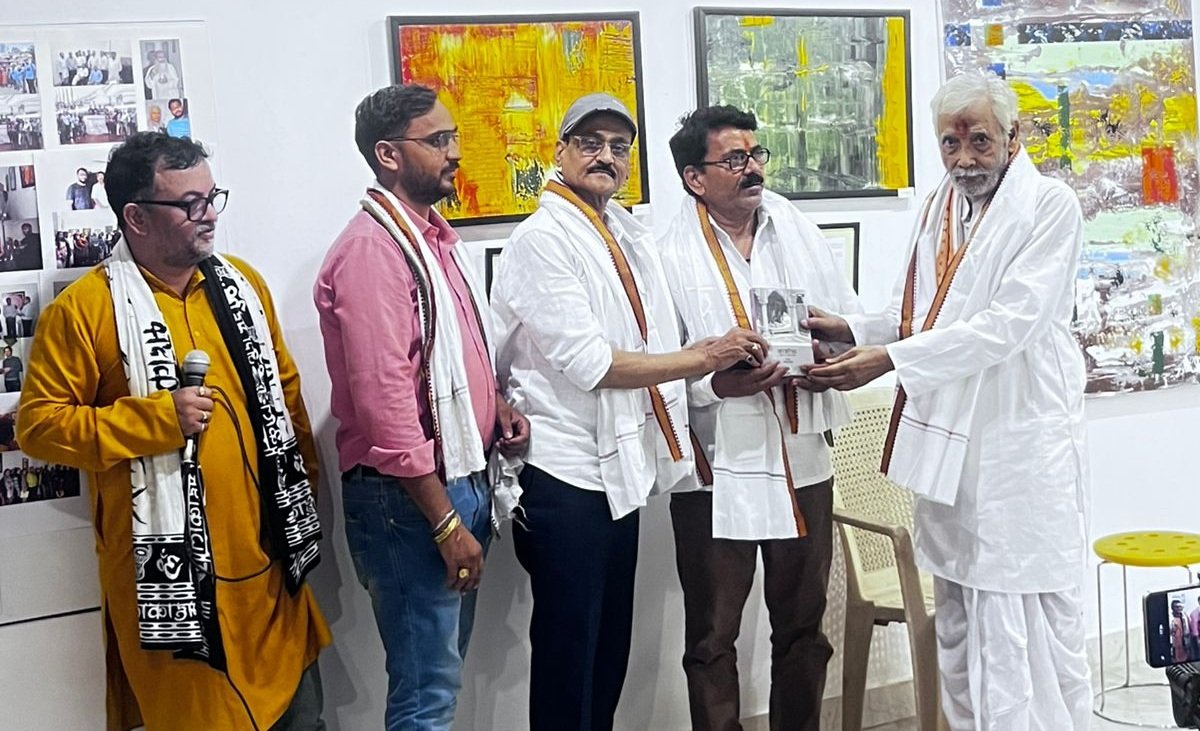
The outgoing chairman of the Kashi Vishwanath Temple Trust and eminent astrologer Prof. Nagendra Pandey said that on the holy land of Kashi, the difference between life and death ends and death is also considered auspicious because it is not just a city, but a spiritual entity that rises above the physical plane and experiences spiritual consciousness.
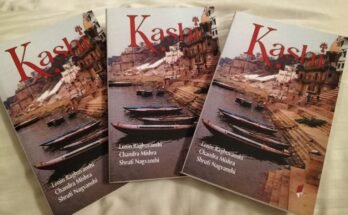
Prof. Pandey was speaking in the ‘Chorus-2026’ event at Mehta Art Gallery in Mehrauli, Varanasi during a discussion on the book ‘Kashi’ written by Dr. Lenin Raghuvanshi, Chandra Mishra and Shruti Nagvanshi. The event was organized under the coordination of acclaimed artist Amit Kumar.
He said that a person who comes to Kashi does not come for indulgence, but in search of liberation. Kothis and Ashrams built on the Ganga Ghats are also built for this purpose, where people stay in the last moments of their life and try to attain salvation through bathing in the Ganges, worshiping Baba Vishwanath and meditating. It is believed that a person who leaves the body in Kashi is freed from the cycle of birth and death.
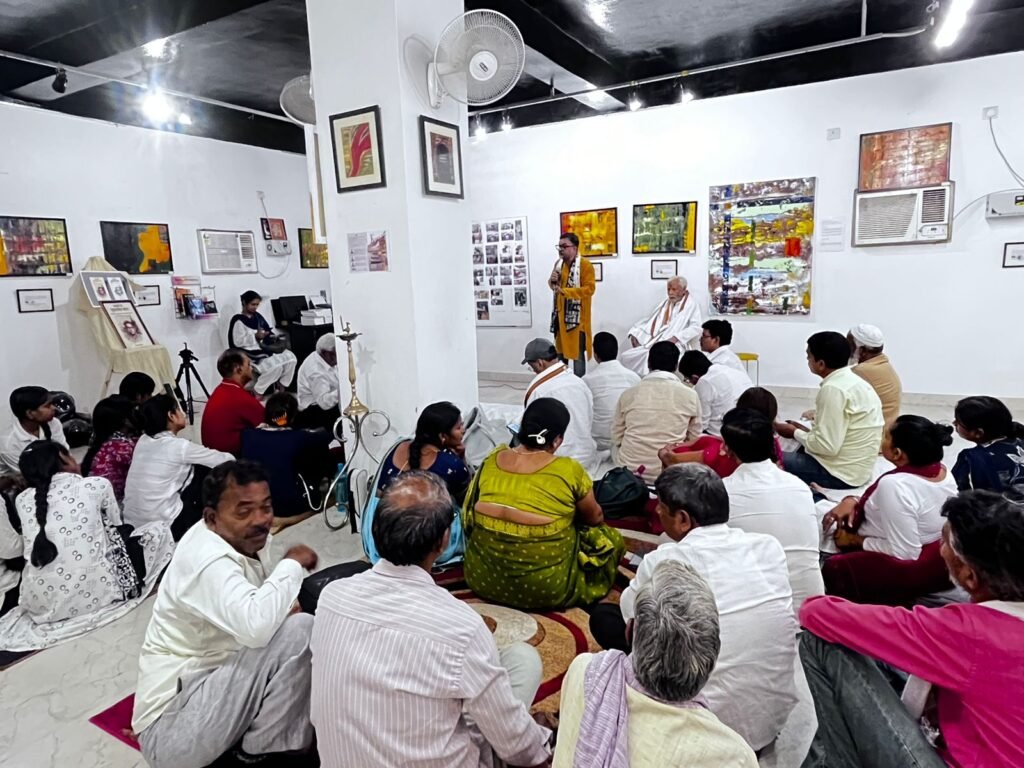
Referring to ‘Kashi’, Prof. Pandey said that this book is the result of intense spiritual practice and study. It presents Kashi from a broad and eclectic perspective, introducing readers to the spiritual depths of the city. He said that knowing the unknown is the real meditation and Kashi is the best center for this.
Senior journalist Amitabh Bhattacharya said the city is not only a centre of faith but also a unique confluence of different religions and traditions. It is a city where different ideologies and beliefs co-exist without conflict. At present, there are indications of the existence of about 26 religions in Varanasi, whose number of followers is more than 10 million globally.
Distancing himself from political references, Amitabh Bhattacharya said that Kashi does not belong to any one person or ideology, but belongs to everyone and will always remain with its originality. Giving the example of river Ganga, he said that its stream also flows away from the traditional direction, which symbolizes self-reliance and thinking of a different mindset. He expressed hope that more in-depth studies on this subject will come out in the coming years like the book ‘Kashi’.
Highlighting the social, religious and historical complexities of Kashi, senior journalist Ajay Rai said that to see Banaras as a city only is to limit its soul. Kashi is a living ‘idea’, which needs to be understood in the context of time, society and traditions. Questioning the inclusive image of Kashi, he made a historical reference that before 1957, there were restrictions on the entry of Dalits into the Kashi Vishwanath temple. To assume that Kashi has always been completely harmonious and egalitarian would be to ignore the complexities of history.
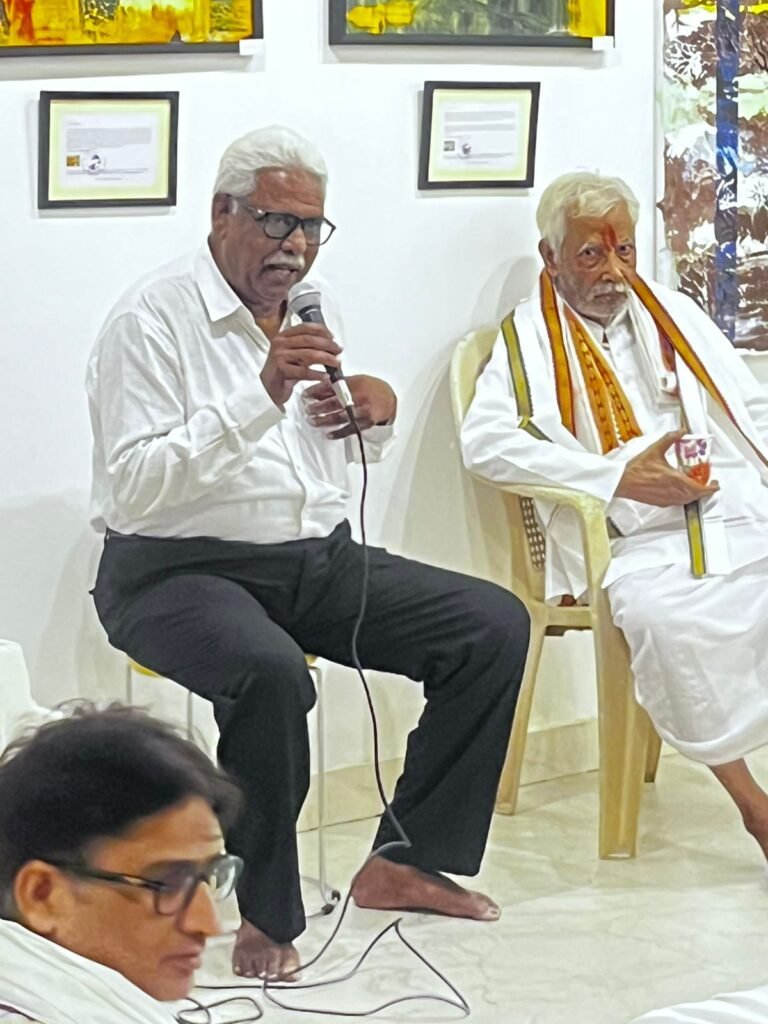
Quoting the Skanda Purana, he said that even the concept of salvation in Kashi is not easy. According to him, not only death in Kashi is not a guarantee of salvation, but the practice and conduct of life are equally important. Today the concept of ‘Moksha’ is being seen superficially in Kashi and emphasis is being laid on beautification of crematoriums, which is not in line with the original spiritual spirit of Kashi. The environment of Kashi has been changing over time and requires in-depth study and continuous writing to understand it. Appreciating the authors of the book, he said that more research and deliberation should be done to bring out the real picture of Banaras.
Senior journalist Kumar Vijay said that to see Banaras only as a city is to limit its soul. It is not enough to die here, but the conduct and practice of life are equally important. Historian Dr. Mohd. Aarif highlighting the historical and cultural plurality of Kashi, said that Ghalib had also appreciated the cultural richness and intellectual atmosphere of Kashi. Referring to the works of Kabir and Tulsidas, he said that Kashi always kept human values and the spirit of love at the centre. The book also alludes to this pluralistic tradition and provides an opportunity for researchers to understand the city from a new perspective.
The program was conducted by the author of the book, social activist Dr. Lenin Raghuvanshi. Senior journalist Vijay Vineet expressed his gratitude to the visitors. On this occasion, the meaningful initiative of painter Amit Kumar was appreciated and he was felicitated. In the discussion, the district president of the Rural Journalists’ Association C.B. Tiwari ‘Rajkumar’, Rahul Yadav, activist Idris Ansari, Pankajpati Pathak, Mangala Prasad Rajbhar, Dr.Shammi Kumar Singh, Vikas Dubey, Chandra Mishra and others were present.